Showing posts with label Contemporary Fiction. Show all posts

Mar 1, 2014

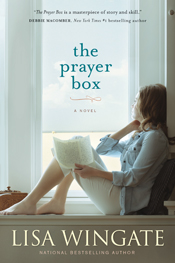
The Prayer Box, by Lisa Wingate


It's been a while since I last read a book that would make me want to visit the place described in it; Hatteras and the Outer Banks had never been as appealing as they are in "The Prayer Box."

Tandi, a mother of two, and a lady that has survived hardships, abuse, abandonment, and other taxing situations, tries to start a new life in Hatteras. When she first arrives in Hatteras, she rents the bungalow of one of the main houses of the island, where Iola lives.  However, Iola passes away and Tandi is charged with the task of setting things in order in Iola's house.

One day, she was starting to clean one bedroom and she came across prayer boxes, each for a year if Iola's life. While her life starts taking shape, Tandi makes time for reading Iola's testimony of hardships and struggles. Even if they never actually meet, Iola becomes a mentor to Tandi, and this is the most precious thing of this book - how God's love and forgiveness can actually change someone's life and give them hope in every situation.

This book is full of wonderful, detailed descriptions that can easily transport the reader to the town of Hatteras in an instant. Despite this, the plot itself seemed too shallow with unsolved pieces that actually made it far from an enjoyable read.

As a big contrast to the wonderful pictorials, there are strong stereotypes in the book as well. There is the handsome, tall, strong surfer that desires every good-looking woman around and desired by them in return. Good morals, responsibility, accountability, kindness and similar adjectives will never be used to describe him. There is also the intelligent, clumsy, kind and undervalued man that no one seems to notice but is actually a better "husband material" than anyone could think; moreover, he is a teacher and is good with kids. I could not help but constantly thing of literary dicotomies like Mr. Darcy and Mr. Whickham, or Ferrars and Brandon, which probably made this book more difficult to read, because it is far from Jane Austen. If I were writing this review as a school assignment, I would definitely go deeper into it, but I would not like to completely spoil (even more) the book for those who are interested in reading it.

This brings me to the fact that I am (obviously) not pleased with the plot of the book. It is a nice, self-discovery journey for Tandi, but hardly enticing. Her insecurities often surface, and there are hints to lack of structure and discipline when she was growing up. This translates in a lack of identity and unawareness of her strengths and skills that allows people to either constantly manipulate or nurture her.

I must emphasize that, to me, the positive side of this book is Tandi's curiosity for Iola's letters, which are full of honest comments, from happiness, anger, anxiety, frustration to rejoicing and even a little mischievousness. Iola's authentic and free relationship with God oozes all over her letters, and this is what sparks in Tandi the new motivation for change. Besides, there are several individuals in the community that strive for living Christian lives and welcome Tandi in an unimaginable, friendly and loving way. 


At moments, this book is more like a modern fairy tale full of stretched circumstances and loose ends. There are some characters that take a major role in Tandi's part, but their relationship with her is hardly solved. I keep feeling that there was really no conclusion, which is not necessarily bad, but leave a bad aftertaste in this case. However, contrary to the wonderful, detailed and long descriptions of the "heroes" in Tandi's life, the undetailed attention to the other side of the coin weakens the story.

I would recommend this book if someone is interested in an easy read. There are some good values depicted in the story, particularly in Iola's letters, that can be used as practical examples for biblical teaching. In this sense, Tandi's transformation is also a token of what God's love and forgiveness do for those who seek Him with all their hearts and with authenticity of motivation, just like Iola did. 

I received a complimentary copy of "The Prayer Box" from Tyndale House Publishers in exchange for an honest review. In no way has this biased my opinion on the book or author.


Feb 23, 2013

Congo Dawn, by Jeanette Windle


This new book has the typical elements you can expect from a fiction novel that takes place in an African conflict zone – abuse and draining of a community due to its natural resources and foreign businessmen blinded by profits and ignoring the devastation their enterprises cause to the people living in their source of wealth, as well as suspense, unbelievable circumstances, romance… However, this novel tells no ordinary story and is far from being typical.

What makes this novel so special is not the common thread it shares with other books, but the wonderful depth that Jeanette Windle imprints in the story through amazingly accurate historical, social, geographical and spiritual depictions, as well as her care and interest for those who have seen their lives threatened again and again.  She takes particular interest in describing how the apparent comforts that Western civilization offer do not yield to happiness.  True zest for life comes from overcoming what lies ahead and keeping our eyes on heaven; it lies on the certainty that the Creator is good and just, no matter how horrible men’s actions might be. 

Robin, formerly in the Armed Forces serving in Afghanistan, is hired as a translator for a security team that would go into the Ituri region of Congo in order to check the actions of Jini, a local insurgent that is threatening the operations of a mining enterprise.  Robin’s niece is need of a medical procedure, and this job is Robin’s way of providing for the kid and Robin’s sister. Robin comes across with Michael, a friend whom she holds responsible for her brother’s dead. Michael is a doctor who grew up in the area where the mine is, so he has apparent ties to the local community.  The security team sets up at Taraja, the place where Michael’s family lives and have set up a medical clinic.

What Robin never imagined back home, is that this job will imply more than dealing with the living arrangements for some weeks.  She needs to face and deal with Michael, his family and the actual loyalties of those around her.  Little by little, she finds out that things might not be all what they initially seem to be, and she ends up in the middle of a tangled situation between her employer, the community and the government; her life might be in danger, but after learning about the atrocities Taraja has been through, her eyes start to open and even her faith becomes a challenge. Robin must face a tough decision – whether to follow her instincts or let the military training kick in.

While the intrigues go on, Michael and Robin recognize that they still have feelings for each other, but resentment and pride is in the way. Both of them learn about forgiveness and the awful consequences they have brought to each other’s life by jumping into conclusions. They must decide whom to trust and how to act; ethics fluctuate with interest, self-motivation and self-gratification, but power shines with money’s glow and it will push them to the limit.  They can either be part of the solution, stopping that monster from devouring the Congolese or allowing themselves to be deceived…

One aspect of the book that I really enjoyed was the accurate historical and social description of the Ituri and Taraja.  Jeanette Windle’s biographical information states that she is the daughter of a missionary family and that she has lived in six countries and traveled to more than twenty. This fact is apparent in the beautiful, vivid and accurate descriptions of the Congolese country; it is obvious that Mrs. Windle has a profound interest in other cultures and in understanding the facts that have shaped their people’s identity.  Not only does the author transport the reader to a luscious green rain forest, but she is also able to share the warmth and richness of life in the simple life of the people living in the Ituri region. I could not get enough of the colors, smiles, drums, singing, rhythmic chores, joy and sense of belonging Mrs. Windle describe of Taraja.  I also appreciate the fact that this does not dilute the reality that many African people have to face – the destruction of their home towns and abuse from people seeking to profit from the resources that should benefit them.  

What amazed me the most is the way people who have been unimaginably tough situations still have a zest for life and are able to grow closer to God as a result of it; I wonder how we might seek to strengthen our own relationship with God, were we to face such tragedies as the people of Taraja have. For instance, conflict is considered as an opportunity to purify His church (p. 168-169), to refine our character (p.275) and to provide an ideal environment where resourcefulness, strength, resilience, ingenuity and generosity will thrive (p.277).  

The author does take a long time to set the story, which makes the start somewhat dreary, but it is well worth putting up with it.  A little more into technique and a personal preference, I appreciate the fact that the author takes her time to finish the story and not leave loose ends to it; many books today seem to want to end on a high note (generally a romantic one), without taking the time to resolve the issues that were crucial in determining the turns of the plot.  It was refreshing to read a book that respects the reader enough to do so.

I would highly recommend this novel as a gift or reference for a study group.  The situations it contains might not be the easiest to cope with, but the richness and sincerity in the Tarajans and their relationship to God is certainly a feature to treasure.  Vocabulary is clean, and although the main characters are attracted to each other, there are no improper situations, making it a good option for most audiences, including older teenagers (please make sure to verify the contents first and be ready for questions).  As a plus, the author includes a series of questions in the end of the book that invite the reader to reflect and analyze attitudes that could turn into good learning experiences if channeled appropriately. Because of the tough questions it addresses and its harmony with Scripture, this book could definitely be used as an evangelizing tool as well. 

It is commendable that in a world where most people prefer reading light stories that just “tickle their ears,” there are authors like Jeanette Windle who care enough to use their talent in order to share the love of God for humans.

I received a complimentary copy of the book from Tyndale House Publishers in exchange of an honest review.  The latter has not influenced my opinion on the book or on the author.

Jan 12, 2013

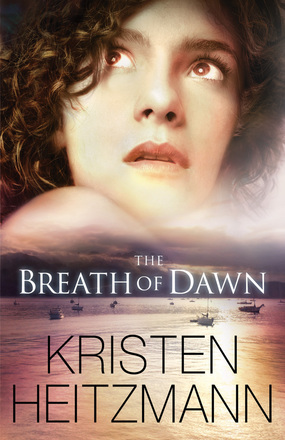
The Breath of Dawn, by Kristen Heitzmann


“The Breath of Dawn” tells the story of Morgan and Quinn.  Morgan is a successful businessman who has amassed a fortune and gained ample recognition by assisting companies solve their problems and directing them back into a profitable direction.   But he now finds purpose in living only in his 2-year old daughter, after losing his wife and older daughter.  Quinn makes a living by buying items from old estates and reselling them on e-bay, and has tried to isolate herself as much as possible, because she fears her past and Markham, the dangerous man she witnessed against years ago.  They  meet when a house is about to come to the market and both are interested in it – Quinn buys and sells items while Morgan plans to turn it into a home for him and Livie, his daughter.

When Markham is released from jail, the threatening messages start and Quinn sees her worst nightmare come true.  At this point, she has become way too close to Morgan and his family and fears for their safety.  She finally opens up to Morgan, the ever problem-solver that likes to take things in his own hands and offers an alternative that seems to jeopardize their future instead of securing it.

When I started reading this book, I wasn’t aware that it was the third one in the series; it took me a while to become suspicious about the characters.  When the rest of the Spencers are brought in the story, it was good to share their Christmas celebration; their family life has its ups and downs, but it is encouraging to see people believing in God and staying true to godly principles despite difficult circumstances.

Up to this point, “The Breath of Dawn” is another token of Kristen Heitzmann’s wonderful ability to weave plots together, keep the reader interested and depict Godly characters. It all seems to be well, but there are aspects of the book that wander off of the Bible and flirt with a current idea of romance that is not godly at all. I am particularly referring to two aspects that have left me with a “cheap novel” aftertaste; by this I mean a novel that seems to be more interested in tickling the senses and finding a good marketing selling point than in portraying a character or situation from which the readers  can learn Biblical principles. 

The first one is the supernatural aspect of the basement; I presume that the author wanted to add suspense to the story by writing about ghosts and “a presence,” but it is just distracting, it doesn’t add anything to the story and is left unresolved.

The second one has to do with one aspect of Morgan’s solution – (SPOILER ALERT) please note that the rest of this paragraph contains information that will reveal some details of the story, but I need to include this so that I can explain why I find it so distasteful and out of line with the rest of the story.  Always the problem solver, Morgan comes up with an extreme idea that, while providing a quick solution for Quinn and which might come later in time anyway, seems too forced and almost borderline of being a one-night stand. The author “covers her bases,” by having Morgan arrange a quick marriage to Quinn, out of the country and arranging a sort of dream honeymoon that might captivate a lot of readers, as it is the epitome of honeymoons, full of luxuries and money available, ready to quench any whim and craving.  This is a side of Morgan completely opposite to the “family side” of Morgan; it does look like the book implies that a mere convenience is a good enough reason to get married.

In this sense, this book is very far from offering a good alternative to clean, Christian entertainment,  implying that Biblical principles and ethics and morals are gray and can be blended into the current worldview - the main reason why I advice to read it with caution, or even better, not read it at all.

I received a complimentary copy of this book from Bethany House Publishers. This has not biased my opinion on the book or on the author.

Nov 28, 2012

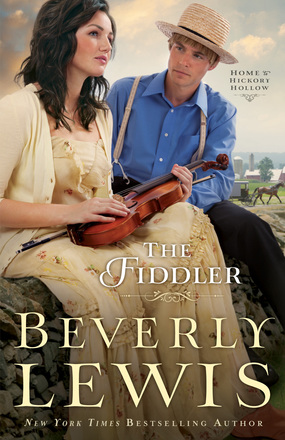
The Fiddler, by Beverly Lewis


Amelia is a young and wonderful violinist whose life was always planned for her. Constant rehearsals, presentations, hours of daily practice and a strict father have made her the famous virtuoso, able to delight audiences from all over the world. Despite all her training, “The Fiddler” starts with Amelia fiddling as “Amy Lee” in a country music festival – nothing that would have ever been expected of her. After her performance, her manager is able to get a hold of her and lets her know that her father and he already have arrangements for her, for the next months. The unceasing rings of her cell phone remind her that even her fiancé, another great musician, was expecting her to be with him on that day... 


Amelia finds herself lost in other people’s wishes, but she’s torn in between herself and not hurting those who are dearest to her. She loves music, but it seems that she has not been able to actually enjoy it. That same night, she starts driving back home, but she gets lost in a bad storm. Conveniently, her cell phone breaks when it falls down to the ground and gets soaked. Amelia then looks for assistance at a nearby cabin, where she meets Michael, an Amish young man who, very much like her, is looking for his own path, away from his roots. Michael and Amelia are surprised at how much in common they have, and both would like to spend more time together, particularly when Michael tells Amelia about his plans of talking to his father and letting him know about his own decision.


Michael asks for Amelia’s support, and both Amelia end up spending the weekend in Michael’s hometown, Amelia gets a little taste of freedom, but also finds some of the consideration and respect she’s been looking for. She’s welcomed by the community, but also frowned at when people learn about her music. Michael realizes he has to stay more than he had initially expected because his father has an accident; he is an honorable person that will not abandon his family in a time of need.


Both of them face challenges and have to deal with respecting their parents. They both realize that the last thing they want to do is offend them, but their control over their lives also has to stop. Besides that, the attraction between Michael and Amelia is obvious. However, they both decide to face the issue and not let themselves go for their mutual feelings.  Also, they will find that there are people who support them and encourage them to do the right thing before God.  Following the right path is never easy, but it is also what shapes Michael and Amelia for the times to come.


“The Fiddler” has all the “Beverly Lewis” features people have come to love; however, she has managed to capture another love story in such a way that it feels as if this was the first time I have ever read an Amish novel by her. In other words, do not think that this story will be innovative in that way. This does not make it   less captivating… I only wish it came in one installment!


I received a complimentary copy of this book from Bethany House Publishers in exchange for an honest review. In no way has this influenced my opinion on the book or on the author.

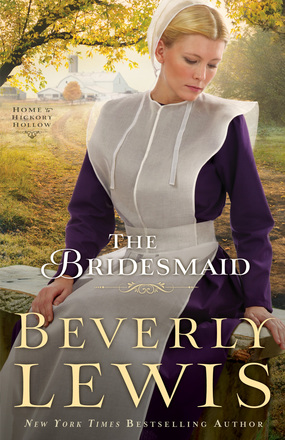
The Bridesmaid, by Beverly Lewis


A young man and a young woman with hope of marriage; conflict between wants, traditions and needs; the quilting bees, the gardening, and the hard and spotless work in the kitchen; the Kapps, aprons and straw hats; the practically idyllic life in Hickory Hollow… All of it is in this book.  And from this point of view, there is nothing new in this new Amish novel by Beverly Lewis. Actually, I would dare say that the situations depicted in the book are highly impossible. Alas! This is a fiction work after all and, despite all the expected features of a Beverly Lewis book, she manages to create a love story through which we see the characters deal with conflict in a beautiful manner (excepting for Cora Jane, the obnoxious brat) that only someone with a strong commitment to biblical principles would make us of.  Mrs. Lewis summarizes it as follows: “…we’re all here by design… that none of us is an accident in God’s eyes.  Our heavenly Father’s hand is at work in all of our comings and goings – and in the choice of a life mate (p. 312).”  That’s the main beauty of this book.

The story revisits Joanna, the kind young woman who is introduced in “The Fiddler,” the first book of this series.  She has gone on with her life in Hickory Hollow, and the reader learns that she has been at the altar several times, always as a bridesmaid. Cora Jane reminds her that “three times a bridesmaid, never a bride,” and Joanna can’t help but think that some people already consider her to be a spinster at her age. However, she meets Eben when the family travels to another Amish community, and her whole outlook on her life shifts. Distance does not aid their relationship, which is also hindered by Joanna’s commitment to her church, Eben’s duty to his father’s farm, and Cora Jane’s (Joanna’s younger sister) selfishness and inability to cope with change. The largest part of the book describes the hardships Joanna and Eben have to face to nurture their relationship from afar.  

The end is farfetched and a bit too convenient but, despite my chuckles at the unlikeness of the odds, it didn’t keep me from savoring the richness of conclusion, wrapped in the details of Amish culture – particularly quilts – that play an important part in the resolution of the story; Aunt Joanna’s faith, the woman Joanna is named after, is remarkable and inspiring. Equally inspiring are the sacrifices Joanna and Eben are willing to make for each other, putting the other person before their own wants.

A part I really enjoyed was the prologue. It describes how Joanna and Eben met. It happens all in the beach, where there are many non-Amish people enjoying the sand, sea and sun.  At one point, Joanna starts toying with the idea of letting her hair down, just to enjoy the breeze, but she “didn’t want to add to the misconceptions far too many Englischers already had about us [the Amish people], some even from novels they’d read (page 9).” Being the utmost Amish writer, I could picture Mrs. Lewis getting a kick out of this line, as I did.  I don’t know how many accomplished people would be brave (and goofy) enough to let themselves joke with themselves the way she does, all the way to the end.  Joanna  likes writing, and I can picture a bit of Mrs. Lewis in her – rereading what she has written, pondering ways of choosing a better wording, having a binder with her drafts, finding inspiration in her friend’s lives and even snuggling in bed with a notebook on her lap (p. 130-132, 206, among other references throughout the story). In short, this particular novel offers a deep insight into Beverly Lewis’s as a woman and a writer. 

I also enjoyed several references to other characters that live in Hickory Hollow.  I won’t mention how Mrs. Lewis uses this resource, but I will say that this book sparked my interest in reading some of her previous stories again, which I would gladly do anytime.  This particular feature is not absent in “The Bridesmaid;” Mrs. Lewis has a way of writing in which she tells enough of the story to make a book interesting and enjoyable, while leaving enough slightly inconclusive to leave the reader wondering about the “what else,” and she certainly delivers with each sequel. 

I would definitely recommend this book to anyone who might be interested in Amish fiction.  As any of her previous works, this book has clean vocabulary, good morals and godly principles. Furthermore, as with any couple getting to know each other in the way Joanna and Eden do, there is sexual tension, but it is coupled with respect, modesty and restraint. This can only be treasured in a time where the pace and values of today sadly seem to always tend in the opposite way.

I received a complimentary sample of this book from Bethany House Publishers, in exchange for an honest review.  This has not biased my opinion on the book, nor on the author.

Nov 20, 2012

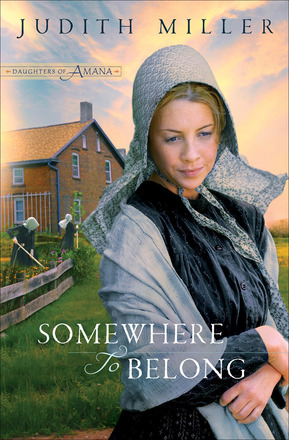
Somewhere to Belong, by Judith Miller


Somewhere to belong tells the story of two young women that come together when the Schumachers move to Amana from Chicago, where they have lived a life of comfort and luxury; looks, things, trips to the mall and self gratification were taken for granted. They meet the Ilgs, who have lived in Amana since it was established. Johanna Ilg is assigned the task of helping Berta Schumacher to understand the Amana way of living and her role in the community. But Berta does not fit in, and she keeps trying to get her parents’ attention; after all, she was told the family would be in Amana for some weeks, not for good. Johanna and Berta do not have an easy time together, but they learn valuable lessons, like the awareness of one’s work and how it affects other members of the community – a true lesson of unselfishness and responsibility; or how forgiveness and understanding can be the most valuable assets in life. Everything will test their faith, but Johanna explains that it is just getting stronger. Overall, a certainty of who we are, a certainty of life and a dependence on God are developed throughout the story.

The author uses a very interesting writing technique. One chapter, it is Johanna telling the story; the next one, it is Berta. This makes the story much more intriguing, as the reader is able to see how one character’s decisions affect the other, and a sort of compassion and empathy between them is developed little by little, despite being so different. It keeps the reader wanting to discover what unexpected surprises the next pages keep. What Johanna and Berta have in common is that their families have kept secrets and they must decide whether to be selfish or see the issue from another point of view when the true facts are known. Both young women learn that we all go through difficult situations, but it is better to face the problems and not to run away from them; also, we must be prepared to live the consequences of our choices, and that of others.

I enjoyed this book so much, that I have been researching some about the Amana Colonies. There are many things we can learn from the Amana people, and I was thrilled to know that they are open to visitors. I will definitely be reading more of Judith Miller. I can’t wait for the next book in the series to be published!

Bethany House Publishers gave me a complimentary copy of the book for review, but this does not bias my opinion on the book nor on the author.